Marinas, Boat Dealers, Fishing Charters, Waterfront Dining, Lodging, Diving,
Attractions, Boat Repair, Snorkeling, Kayaking, Sailing, Watersports & More!


Search For
  Near       All Categories

Home | Boating | Fishing | Diving | Water Sports | Safety | Environment | Weather | Photo BlogAdd Your Company to the Directory


You Are Here > Home > Florida Diving > Coral Reef

Coral Reef
 

What is coral?
Coral refers to a group of animals related to sea anemones and jellyfish. Most corals are found in tropical and subtropical waters around the world.

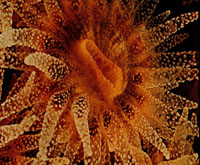
All animals in this large group (called Cnidarians "ni-Dairy-enz") have tentacles with stinging cells called nematocysts "ne-Mat-oh-sists." All corals have the same basic body structure. Tentacles containing stinging cells surround a central body cavity. Corals are placed in two different categories:

Hexacorals - These animals have 6 tentacles or multiples of 6 (i.e. 6, 12, 18, 24…). Their skeleton is described as "hard" and is usually made up of calcium carbonate. Books on Hexacorals

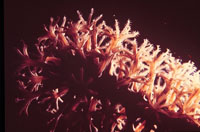
Octocorals - These animals always have 8 tentacles. Skeleton material is described as "soft" and is made of flexible proteins.

For both groups, the body cavity, or coelom, partially encases the animal. Coral tentacles capture food (plankton) and sweep sediment from the surface of the animal.

Where do corals live?
Reef building corals are found in tropical and subtropical waters around the world. Corals can be found in oceans all over the world, on the deep sea floor, and even under the ice cap! Corals have specific requirements for habitat conditions. Ecological measurements of living organisms consist of two broad classes of data. The first is a measure of selected ecological components (mass, volume, biomass or square area). The second is a measure of the number of species that make up each of the selected ecological components. Most coral monitoring projects use percent cover as a measure of area and species richness or species diversity as the measure of number of species. For more information read the pdf file titled "Coral Sea Stats."

How Are Coral Communities Measured?
Ecological measurements of living organisms consist of two broad classes of data. Th
e first is a measure of selected ecological components (mass, volume, biomass or square area). The second is a measure of the number of species that make up each of the selected ecological components. Most coral monitoring projects use percent cover as a measure of area and species richness or species diversity as the measure of number of species. For more information about Florida's coral reefs read Coral Sea Stats. See the Coral Reef Monitoring Project for more information about coral monitoring programs at the Fish and Wildlife Conservation Commission.

Vocabulary Quiz
What is the difference between "hard grounds" and "hardbottom"? Answer: "Hard grounds" is a geological descriptor. The term describes the geological character of the substrate, but does not describe the overlying biological benthos in any way. "Hardbottom" is a biological descriptor which characterizes the living benthos. It happens that hardbottom habitat, with a thin veneer of sand, usually overlies hard grounds, but not always. "Hardbottom" and "live bottom" are functionally interchangeable terms; however, "live bottom" is a more general descriptor than "hardbottom." If you perform a search, bear in mind that "hardbottom" is the preferred term; but "hard bottom" spelled as two words is not favored in the literature.

Help For South Florida Reefs
The Southeast Florida Coral Reef Initiative (SEFCRI) is a local action strategy for collaborative action among government and non-governmental partners to identify and implement priority actions needed to reduce key threats to coral reef resources in southeast Florida. The targeted area includes Miami-Dade, Broward, Palm Beach and Martin counties. Learn more at their website.


Search the Business Directory (Browse All Categories)
Associations, Organizations & Clubs Art & Artists
Charters - Dive Diving Equipment
Environment Gifts & Gift Shops
Instruction - Diving Magazines, Newspapers & Publications
Photography & Video Research
Sightseeing Tours Snorkeling Trips

Florida Keys Coral Habitat

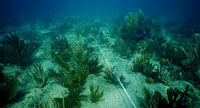
Hardbottom habitats are generally dominated by octocorals with low hard coral cover and species diversity.

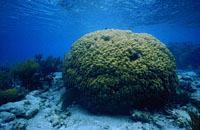
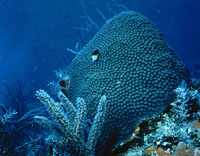
Patch reef habitats are usually characterized by high diversity of both octocorals and stony corals. Stony corals are often represented by large buttresses of boulder corals

Shallow offshore habitats are high-energy environments with large branching corals and expanses of bladed fire coral and yellow sea-mat (a different type of Cnidarian called zooanthid).

Deep offshore reef habitats are inhabited by a diverse array of benthic (bottom dwelling) organisms including large sponges, octocorals, and stony corals.

Text and photographs provided by Florida Fish and Wildlife Conservation Commission's (FWC) Florida Marine Research Institute (FMRI)

Privacy Policy | Advanced Search | Photo Gallery | Add Your Company To The Directory | Contact Us

© 2001-2009 Florida Marine Guide.com  All Rights Reserved. 
All logos and trademarks in this site are property of their respective owners.